

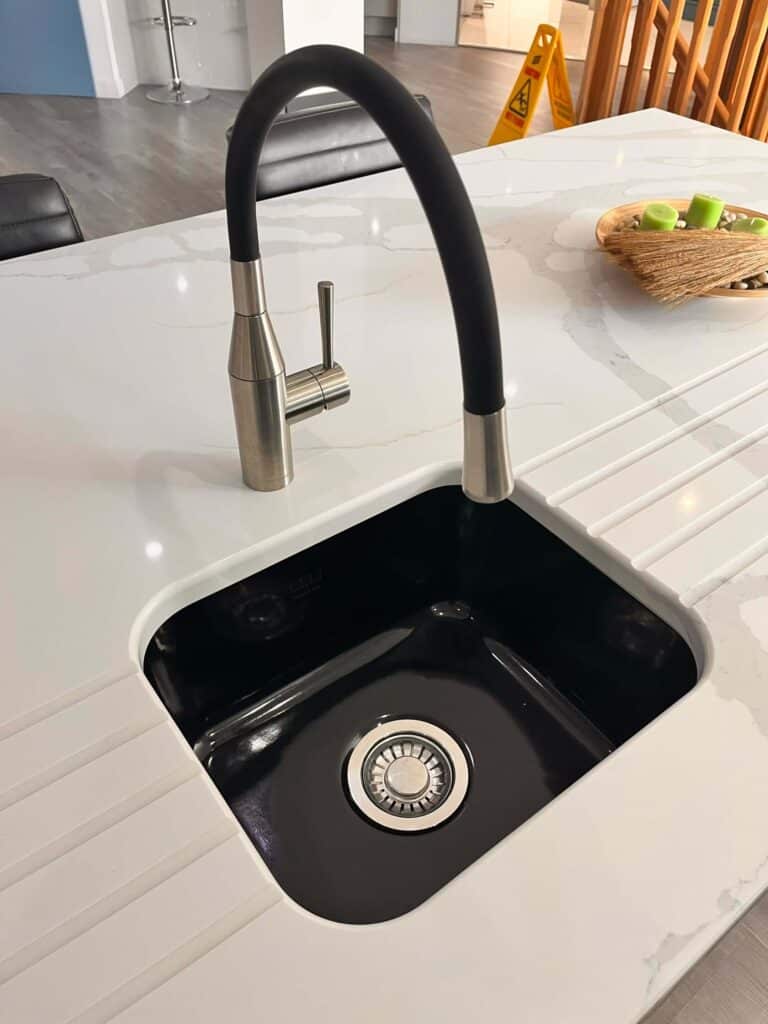
There’s a reason ceramic sinks keep turning up in kitchen after kitchen. Whether the rest of the room is country farmhouse or sleek and modern. That deep, glossy white basin does something a stainless steel sink simply can’t: it anchors a kitchen and makes it feel finished.
But a lot of people who choose one don’t actually know the correct care of ceramic sinks. Then they can end up with dull patches and grey scuff marks. Leaving a sink that looks tired within a couple of years instead of staying showroom-fresh for decades.
The good news is that proper care of ceramic sinks isn’t complicated. It just means knowing what the surface actually is, what it can handle, and what to avoid. So we’ve put together this guide to cover exactly that.
Why ceramic sinks earn their popularity
Ceramic isn’t just chosen for how it looks, although that’s usually where the decision starts. It’s a genuinely practical material for a working kitchen.
The surface is fired at extremely high temperatures. This means it can take direct heat from a hot pan straight off the hob, or a casserole dish fresh from the oven – without any risk of damage.
It’s also completely nonporous. Unlike some natural stone or composite surfaces, nothing soaks into a ceramic sink. This makes it naturally hygienic and genuinely easy to keep clean once you know how.
It’s tough, too.
Everyday cutlery and normal kitchen use won’t scratch it. And it can handle most household chemicals, including neat bleach, without the surface being damaged.
That resilience is exactly why it suits busy family kitchens so well. But resilient doesn’t mean indestructible. So a little care goes a long way towards keeping that glossy finish looking the way it did on day one.
Daily cleaning: keep it simple
For everyday cleaning, you genuinely don’t need anything more than a soft sponge, a squeeze of washing-up liquid and warm water.
- Wipe the surface down after use, rinse, and that’s most of the job done.
The two things to avoid here matter more than the things to do:
- Steer clear of abrasive cleaners, scouring pads or aggressive limescale removers designed for taps.
They’re often too harsh for ceramic and will dull the glaze over time, leaving the surface looking flat rather than glossy.
- Don’t use wire wool or steel brushes.
They feel like they should work for stubborn marks, but on a ceramic basin they cause fine scratching that builds up and becomes permanent.
- If you use a washing-up bowl, choose one with a soft base rather than a rigid plastic one.
It’s a small thing, but it stops unnecessary wear where the bowl sits against the basin day after day.
One habit makes more difference than almost anything else:
- Dry the sink with a soft microfibre cloth after use, rather than leaving it to air dry.
Standing water leaves mineral deposits behind as it evaporates. Over weeks and months that’s what causes the dull, slightly chalky look people often mistake for general wear. Thirty seconds with a cloth prevents it entirely.
The weekly deep clean
Daily wiping keeps things ticking over. But a proper clean once a week (or once a fortnight in a quieter kitchen) keeps the sink looking genuinely new rather than just acceptable.
Diluted bleach is the right tool here. Used correctly, it won’t damage the glaze. It’s actually one of the best ways to maintain the original brightness and sheen of a white ceramic sink.
- Let the diluted bleach sit briefly, rinse thoroughly, then dry as usual.
It’s a five-minute job that resets the sink back to its best.
Removing stubborn stains

Even with good habits, marks happen. The fix depends on what’s causing them.
Mineral deposits and limescale, particularly in hard water areas like ours here in Staffordshire, respond well to a simple soak.
- Mix three parts hot water to one part white vinegar, apply it to the affected area and leave it to work before rinsing clean.
Aluminium marks are a different problem entirely. They’re the dark, almost metallic-looking scuffs left behind by pots and pans dragging across the surface, and ordinary cleaning won’t shift them. A dedicated paste cleaner such as Astonish or Shiny Sink is designed specifically for this and works far better than anything multi-purpose.
The key with both is patience rather than force. Reaching for something more abrasive to speed things up is exactly how the surface ends up damaged
Getting the basics of ceramic sink care right from day one
Good care of ceramic sinks really comes down to a handful of consistent habits: a soft sponge instead of anything abrasive, a dry cloth instead of air drying, and a weekly clean instead of letting things build up. Get those right and there’s no real reason a ceramic sink shouldn’t look as good in ten years as it did on the day it was fitted.
Is your ceramic sink in need of a refresh?
If your sink has seen better days, or you’re simply ready for a change as part of a wider kitchen update, it’s worth seeing the current range in person rather than guessing from photos online. Ceramic basins vary more than people expect, in depth, in finish, and in how they sit within a worktop, and that’s much easier to judge standing in front of one.
At our Cannock showroom, we have a range of ceramic sinks on display alongside the worktops and units they’re designed to sit within. Come in, take a proper look, and talk to our team about which option would suit how you actually use your kitchen.
We’re open Monday to Friday 9:30am-5:00pm and Saturday 10:00am-4:00pm at Octagon House, 236-238 Walsall Road, Bridgtown, Cannock, WS11 0JL.
Visit our showroom or call us on 01543 570468 – we’re always happy to talk kitchens.